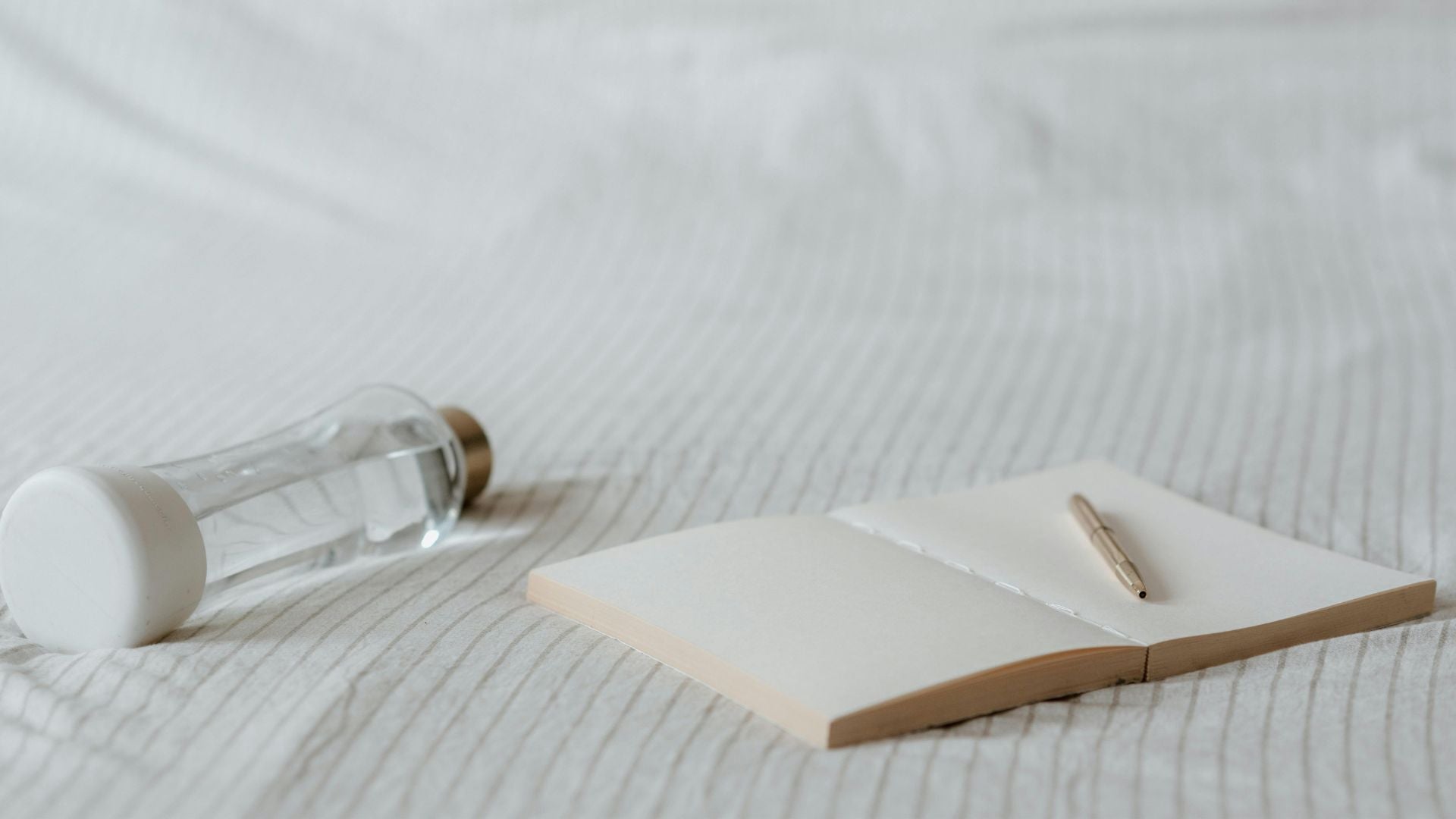
You already know you should journal. You've known for years. You probably have a beautiful notebook somewhere — a gift, most likely — sitting on your bedside table with exactly three entries in it. The last one is from 2022 and begins with "Dear Journal"
We've all been there.
But here's the thing journalling is one of the most well-researched, consistently effective tools for mental clarity, emotional regulation, and genuine restoration. And it asks almost nothing of you except a pen and ten minutes you were probably going to spend scrolling anyway.
So let's talk about why it's worth actually doing this time.
It gets the noise out of your head
Your brain is not a filing cabinet. It was never designed to hold your to-do list, your anxieties, your grocery list, your half-formed thoughts about that conversation from three weeks ago, and your feelings about everything simultaneously. And yet here we are.
Writing things down — even messily, even without structure — externalises the noise. It moves it from inside your head onto a page where it can't keep circling. Psychologists call this cognitive offloading. We call it a relief.
Think of your journal as the world's most patient listener. It never interrupts, never offers unsolicited advice, and never tells you it had a harder day than you did.
It makes you genuinely think more clearly
There's a reason the most effective leaders, creatives, and thinkers in history kept journals. Darwin. Frida Kahlo. Virginia Woolf. And Richard Branson goes nowhere without his notebook.
Writing about your experiences forces you to process them rather than just survive them. You start to notice patterns — what drains you, what restores you, what you want to do and not want to do. Your journal becomes a record of who you actually are, upon clear reflection.
It's stupendously good for your mental health
We don't use the word stupendously lightly.
Studies consistently show that regular journalling reduces symptoms of anxiety and depression, improves immune function, lowers blood pressure, and helps process difficult emotions before they calcify into something harder to shift.
It also improves sleep — because when you write down the things occupying your mind before bed, your brain doesn't need to stay up all night doing it for you. Consider it a handover note to tomorrow.
It doesn't need to be deep or beautiful or coherent
This is where most people go wrong. They think journalling means writing meaningful, eloquent prose about their inner life every day. It doesn't. It can be a list of things that happened. Three sentences about how you're feeling. A question you can't answer yet. What you had for breakfast and why it annoyed you.
The only rule is that you write something. Everything else is negotiable.
How to actually start (and keep going this time)
Keep it next to your bed. Not in a drawer, not on a shelf. Next to your bed. Visible. Ready.
Start with two minutes. Not ten, not thirty. Two. The goal is to make it easier to do than not to do.
Don't reread it straight away. Write and close. The magic is in the doing, not the reviewing — at least at first.
Pair it with something you already love. Your morning coffee. Your evening tea. The ritual you already have. Attach the new habit to the existing one and it's far more likely to stick.
At Kōse, we believe restoration is a practice — something you build deliberately, one small intentional act at a time. A journal is one of the simplest, most powerful tools for doing exactly that.
And unlike most things worth having, this one costs less than your last coffee order.
Pick up the pen. The blank page is waiting — and unlike your phone, it has absolutely nothing to notify you about.
Explore our curated book and wellness boxes at kosebookbox.com.au